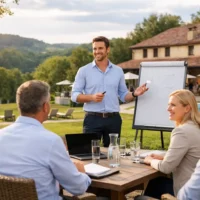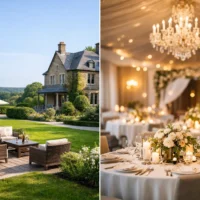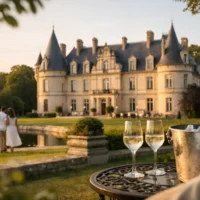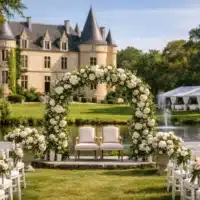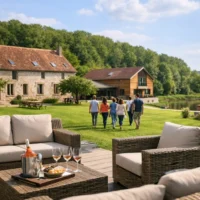
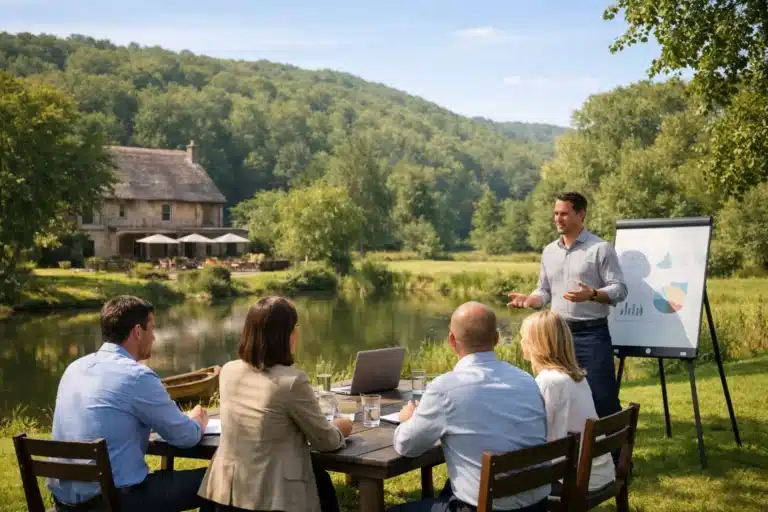
Bringing a team together away from screens, impersonal corridors and the usual office pace changes the very nature of exchanges. A Green seminar in the Oise offering this precious respite: time apart, in an environment that fosters listening, creativity and the joy of reconnecting. Less than a few hours from the major economic centres of northern France, the Picardy countryside offers a blend of accessibility, calm and character.
For a department, a service or a project team, the choice of location is not just about practical organisation. It sets the tone for the meeting. A charming setting, where participants can work, dine, socialise and sleep on-site, transforms a professional meeting into a collective experience.
Why choose an outdoor seminar in the Oise?
The Oise has a rare advantage: it genuinely gives the impression of getting away, without imposing a long journey. This ideal distance helps everyone to leave their daily routine and become more receptive. Discussions continue more naturally after a work session, during a walk in the park, over a coffee on the terrace, or at a shared dinner.
In a château or country estate, the décor also conveys a form of consideration. Inviting colleagues to a well-maintained venue demonstrates attention to the collective. It’s not about multiplying embellishments, but about offering a setting where one feels welcomed, comfortable, and fully present.
This format is particularly suitable for management committees, teams embarking on a new cycle, team-building seminars and strategic reflection days. It can also accompany a project launch, training, or a period of recognition for committed employees. The key is to align the pace of the stay with the objective: a packed day does not call for the same configuration as a two-day residential seminar.
A place that brings together work, living, and shared moments
The main advantage of a residential seminar is continuity. When participants are accommodated on-site, logistics are simplified and shared time is extended without constraint. There are no more hurried departures to get to a hotel, nor journeys between the meeting room and dinner.
This proximity creates a more human balance between formal and informal times. A work session can give way to a break in the gardens, then to a meal where discussions become more spontaneous. These interludes are not secondary: they often allow for a better understanding of issues, for an idea to emerge, or for a suspended dialogue to be rekindled.
On a privatizable estate, discretion further enhances this quality of presence. The teams have their own space, without crossing the anonymous flow of a large hotel. For confidential matters, a management team or a collective that needs to speak frankly, this privacy is as important as material comfort.
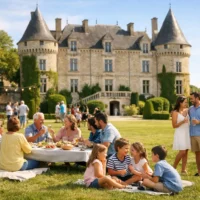
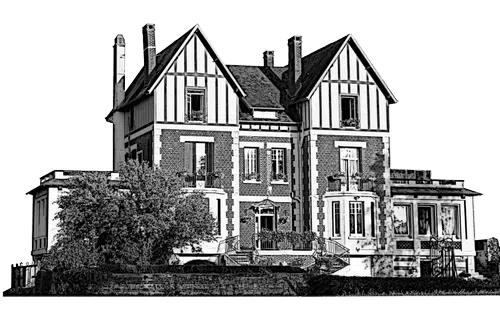
At Château de Quesmy, the atmosphere of an elegant country house makes it the perfect setting for a professional retreat on a human scale, with on-site accommodation and spaces designed for entertaining. The château lends itself to bespoke arrangements, tailored to the group’s composition and the desired programme.
Designing the right pace for your participants
A successful seminar doesn't fill every minute. It allows for periods of concentration, breaks, and opportunities to connect in different ways. In a green setting, it's tempting to add lots of activities. However, it's better to maintain a clear focus: what outcome do you expect from these few hours or these two days?
For a management committee, a half-day of in-depth work, followed by a relaxed lunch and some free time for a walk or informal discussion, can be more fruitful than an overloaded programme. For a wider team, it may be appropriate to alternate between small group workshops, collective debriefs and a convivial outdoor activity.
The residential format lends itself well to a late morning arrival, a welcome lunch, an initial working session, and then a period of relaxation before dinner. The following day, the team returns to the room with a more relaxed outlook. The previous day's informal conversations then inform the morning's decisions.
It is also important to consider the profiles of those present. Some teams appreciate sporting or creative activities, while others are primarily looking for the peace and quality of a shared meal. The elegance of a professional stay often lies in this precision: offering without imposing, energising without exhausting.
The practical details that make the difference
The charm of a castle does not do away with the need for precise preparation. On the contrary, the quality of the venue must be accompanied by smooth organisation. Before booking, it is useful to clarify the number of participants, the expected working setup, and the need to accommodate all or part of the group.
The room must be suitable for its intended use: plenary meeting, workshops, presentation, or training. Natural daylight, comfortable seating, the ability to adjust the layout, and the availability of projection equipment all directly impact attention spans. Reliable network access is, of course, essential when a programme includes video conferences or online demonstrations.
Catering deserves the same attention. A lunch that's too rushed or a standardised dinner can break the momentum of an otherwise well-constructed day. Conversely, carefully prepared meals, which take into account individual dietary requirements, become genuine moments of conviviality. They also provide a natural setting for thanking a team or welcoming new colleagues.
Finally, on-site accommodation brings true peace of mind, especially after dinner or an intense working day. Comfortable rooms allow everyone to retreat, and then rejoin the group the next day without the fatigue of additional travel. For organisers, it is also a welcome simplification: fewer transfers, fewer schedules to coordinate, more time for the seminar content.
Give an intention to each high point
An exceptional setting cannot replace a well-formulated objective. Before choosing activities and the programme, ask a simple question: what do you want participants to be thinking about when they leave? A shared decision, a clearer vision, a more cohesive team, or recognition for their work?
This intention guides everything else. If the goal is to consolidate weakened cohesion, favour workshops that leave genuine space for speech and dialogue. If you are preparing for a new year or an organisational change, alternate information sessions with opportunities for contribution. If the challenge is to celebrate an important milestone, leave more space for food, relaxation and personalised attention.
The countryside seminar is successful when it avoids two pitfalls: becoming a mere meeting moved to the countryside, or, conversely, a pleasant interlude with no follow-up. The right balance combines a clear professional ambition with generous hospitality. The location creates the conditions for bringing people closer, but it is the quality of the discussions that gives value to the stay.
A professional interlude that remains in memory
The Oise invites you to slow down just enough to move forward better, together. Between heritage, nature and the art of hospitality, it offers businesses a territory conducive to conversations that matter. In a characterful house, every detail – the arrival in the courtyard, the light on the gardens, a lingering dinner – contributes to a more personal atmosphere than an ordinary meeting.
To prepare your next seminar, start by imagining what your colleagues need to experience as much as what they need to achieve. A carefully chosen venue can make this period of work a foundational moment, the effects of which will continue long after you return to the office.