Un séminaire d’équipe réussi ne se mesure pas au nombre de diapositives présentées, mais à ce qui change une fois chacun de retour au bureau. Une décision enfin prise, des relations plus simples, une énergie retrouvée ou une direction commune : voilà ce que les participants doivent pouvoir emporter avec eux. Le lieu, le rythme et l’attention portée aux détails ont alors autant de poids que l’ordre du jour.
Start with the intention, before the programme
A seminar does not address the same need depending on the stage the company is going through. A newly formed team needs to build common ground. A growing organisation may need to align its priorities. After an intense period, the aim is sometimes to say thank you, take a step back and rebuild availability between colleagues.
Before choosing a date or an activity, state the objective in a single simple sentence. For example: clarify the three priorities for the next semester, bring together two departments that rarely work together, or give everyone a space to contribute to a new vision. This intention serves as a guiding thread for all subsequent decisions.
It is tempting to try and cover everything in a day or two: review, strategy, training, team bonding, innovation and celebration. This is rarely effective. A seminar gains in quality when it has a single primary objective, supplemented by one or two secondary benefits. Group time then becomes clearer, and discussions more fruitful.
Give every participant a place
The best formats do not rely solely on speeches from management. They alternate information, discussion and joint production. A presentation can set the framework, but it is small groups, well-prepared workshops and question-and-answer sessions that allow everyone to feel involved.
Notify participants well in advance of the meeting's purpose and what will be expected of them. Should they arrive with an idea, feedback from experience, or a topic to resolve? This light preparation avoids the feeling of passively attending a day decided elsewhere.
Choose a setting that really encourages meeting people
Leaving the office is not a superficial backdrop. Changing the setting alters the quality of attention. Far from routines, constant demands and back-to-back meetings, a team can listen differently and take the time for conversations that would never happen in passing.
A human-scale estate offers a valuable advantage: participants remain in the same environment from morning to night. They work, have their meals and, when accommodation is provided on-site, naturally prolong discussions. For a team spread across multiple sites or travelling from afar, this continuity is often much more useful than a succession of transfers and scattered meetings.
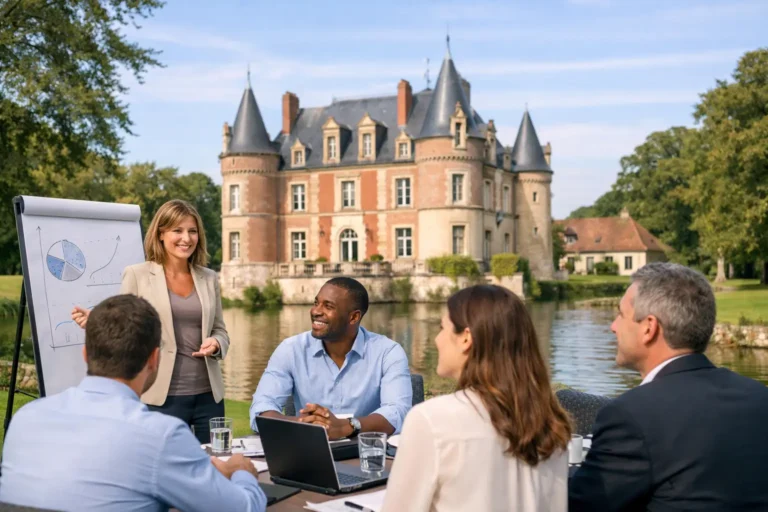
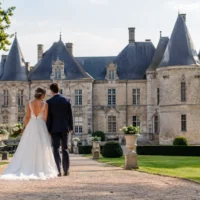
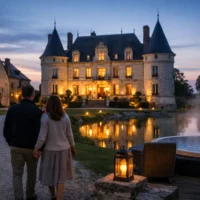
At Château de Quesmy, the charm of a countryside retreat can lend a more personal atmosphere to working time, without detracting from its demanding nature. The tranquillity of a characterful property is particularly well suited to teams seeking to combine reflection, comfort and shared moments.
However, the choice of location must remain practical. Check the capacity, the layout of the meeting spaces, the privacy required for confidential discussions, the catering options and the accommodation conditions. A remarkable setting does not make up for uncertain logistics. Conversely, a well-organised venue allows organisers to take full part in the seminar instead of dealing with unexpected issues.
Building the right pace for a successful team seminar
The quality of a programme often depends on the breathing space it allows. A minute-by-minute schedule gives an impression of efficiency, but it is tiring and reduces spontaneous discussions. Yet, these informal conversations are sometimes the ones that break down silos and bring out the most useful ideas.
Schedule focused periods of work, ideally limited to ninety minutes, followed by proper breaks. A coffee in a lounge, a walk in the park or a few minutes outside can be enough to renew your focus. These breathers are not wasted time: they make decision-making times sharper.
For a one-day seminar, it is better to focus on a central topic, two workshops and a final feedback session. Over two days, a shared evening creates a valuable transition between formal reflection and a more relaxed relationship. It should not be over-programmed. A carefully prepared dinner, in a welcoming atmosphere, is often enough to bring colleagues closer together without putting them on the spot.
Alternate between high standards and light-heartedness
Friendliness must not be used to mask the absence of content. A team-building activity works when it extends the intention of the seminar: it encourages listening, cooperation, creativity or trust. It can be gentle and accessible, rather than competitive at all costs.
The right choice depends on your team. A group used to challenges might appreciate a dynamic activity. For colleagues with varied profiles, ages or physical conditions, a cultural, foodie or creative experience will often be more unifying. The main thing is that no one feels excluded, patronised or obliged to play a role.
Take care of the details that free up attention
A participant looking for their room, waiting for a meal or lacking a quiet space to deal with an urgent matter cannot be fully present. The experience of a seminar is also built on these subtle details: a clear welcome, comfortable rooms, a realistic meal schedule, a pleasant room and equipment tested before the group's arrival.
Appoint a contact person within the company, even if the venue is assisting with the organisation. They will centralise useful information, gather any special requirements and communicate a simple itinerary before departure. The teams appreciate knowing how to dress, what they need to bring, what time they can arrive and how the evening will unfold.
Also think about the more reserved temperaments. Group moments are precious, but everyone must be able to have a few moments of solitude, go for a walk or go back to their room without feeling like they are missing a mandatory step. A successful hospitality make room for freedom.
Fostering decisions, not just good memories
A warm seminar can leave a great impression while producing little effect if the ideas stay in the notebooks. Reserve the final sequence for precise commitments. What decisions have been taken? Who is leading which action? What deadline has been agreed upon? What deserves to be looked into further later?
This feedback must be concise. It is not about writing an exhaustive on-site report, but rather about transforming the discussions into next steps that everyone can understand. A photo of the whiteboard, a shared summary in the following days and a scheduled follow-up meeting are often enough to maintain momentum.
Management has a specific role: it must show that what was expressed during the seminar will be heard. When a team has dedicated time to formulating proposals, a lack of feedback quickly creates disappointment. Conversely, explaining what will be adopted, adjusted or postponed builds a trusting relationship, even when not all requests can be met.
Planning for afterwards as soon as the stay ends
Success also depends on the follow-up. In the week that follows, share the decisions and thank the participants for their practical contributions. A few weeks later, review the announced commitments: what is progressing, what is blocking, and what support needs to be provided? This follow-up meeting turns a pleasant break into a genuine management moment.
A seminar doesn’t need to be spectacular to be memorable. Above all, it must offer the team the time, setting and trust needed to refocus on what matters most. When participants leave with a clear direction and the pleasure of having shared a genuine moment together, work can resume with a completely different quality.



 Français
  English (UK)
  Deutsch
  Nederlands
  Español