Bringing a team together for a working day is simple. Creating the conditions for a frank conversation, ideas that mature and real cohesion takes more time. A seminar room with accommodation it extends the meeting beyond the boardroom, without scattering participants between travel, hotel and restaurant.
For a management committee meeting, a training session, a project launch or a team-building event, the choice of venue profoundly influences the quality of the seminar. In a characterful estate, the atmosphere lends itself to concentration by day and more spontaneous discussions once the laptops are closed. The aim is not to work without interruption, but to give collective work a more balanced rhythm.
Why staying overnight changes the dynamics of a retreat
When everyone leaves in the evening, part of the group's energy fades away with the staggered departures. Discussions are barely underway before transport requirements, personal calls or next-day commitments take over again. Providing accommodation at the seminar venue itself makes it possible to maintain this connection, naturally and without imposing an overly packed schedule.
A shared dinner, a drink in a lounge, a walk in the park or a coffee before breakfast become useful moments. They do not replace structured work sessions, but they create a less formal space where viewpoints become clearer. It is often there that a team tackles a difficulty more simply, or that an idea raised in a meeting finally finds its shape.
This format is particularly relevant for groups coming from several towns. Rather than concentrating discussions over a few hours and asking everyone to hit the road again, an overnight stay offers a more relaxed setting. It also makes it easier to organise a schedule over a day and a half or two days, without the fatigue of daily travel.
Seminar room with accommodation: the essential criteria
An appealing venue is not enough. To be as pleasant to experience as it is to organise, a residential seminar must combine character, comfort and logistical simplicity. The first question therefore concerns the suitability of the spaces for your group: number of participants, meeting format, breakout time and moments of socialising.
A room tailored to the way you work
The ideal setup depends on the purpose of the meeting. A strategic meeting between executives often requires a large table that encourages direct dialogue. Training or a presentation requires greater visibility and comfort for note-taking. For a creative workshop, it is useful to be able to move the seating, circulate and work in small groups.
Before choosing, it is best to clarify how your days will actually unfold. Do you need a single space or several rooms? Will participants need to break away for a confidential call? Are you planning simultaneous workshops? These details prevent you from booking a room that is too large and impersonal for a small group, or conversely, too restrictive for a participatory programme.
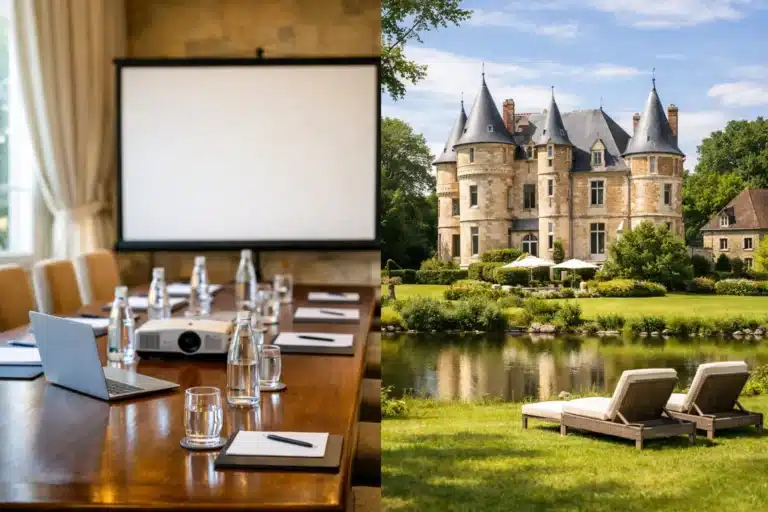
The equipment also includes: reliable Wi-Fi connection, a screen or video projector, connection possibilities, controllable lighting and pleasant acoustics. In a historic venue, the charm of the spaces is precious, but it must remain compatible with comfortable listening and a smooth setup.
Bedrooms that allow for real rest
Accommodation must not be considered as a mere sideline. After a day of intense thinking, every participant needs to find peace in a comfortable and well-appointed room. Individual relaxation areas, quality bedding and pleasant bathrooms directly contribute to the success of the following day.
Organisers would be well advised to check the capacity, the different room categories and the allocation arrangements. Some groups prefer all their rooms to be located in the same area, whereas others look for more privacy. The availability of apartments or more spacious accommodation may also be suitable for speakers, management or participants extending their stay.
A restoration conceived as a time for meeting
Catering sets the rhythm of the seminar. Too quick a lunch can break the momentum; too formal a dinner can tire a group that is already pushed. The ideal approach is to plan indulgent, generous and easy-to-share moments, with an organisation that fits in with the meeting schedule.
It is helpful to anticipate breaks, dietary requirements and the dinner schedule. Depending on the objective, a sit-down meal can prolong a strategic discussion, whereas a more relaxed format will be preferable after a particularly intense workshop. The quality of the hospitality is also measured by this ability to adapt to the group's rhythm.
The château: a setting that encourages a step back
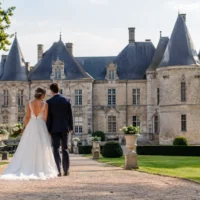
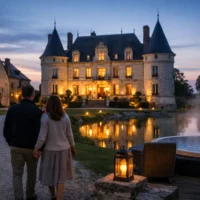
Choosing a château for a seminar is not a question of decor. It is choosing a break from standardised spaces where people work without truly escaping their everyday routine. The architecture, the reception rooms, the park and the bedrooms create a single location that invites participants to slow down just enough to think better.
This break is particularly appreciated during a management seminar, a team meeting after a period of transformation, or a time of recognition for employees. The setting gives value to the shared moment, without the need to overdo it. It reminds guests that they are not gathered to tick off a succession of meetings, but to drive a common project forward.
However, it is important to maintain the right balance. A prestigious venue does not make up for an imprecise agenda, unrealistic timetables or a lack of activities. The charm of the estate must serve the professional objective, not distract from it. A successful seminar combines an inspiring environment with careful preparation: a clear agenda, real break times, defined responsibilities and space left for discussion.
How to organise a residential seminar without overloading the programme
The risk of an overnight stay is wanting to fill every moment. Yet, the appeal of this format lies precisely in the breathing space it offers. It is better to plan two or three well-prepared highlights rather than an accumulation of presentations that leaves little room for listening.
A first day can begin with a welcome and a scoping session, continue with workshops, and then end with a relaxed dinner. The following day, which is shorter, is often ideal for decisions, commitments and synthesis. This structure gives participants time to digest the previous day's discussions before making a decision.
Complementary activities must be chosen with discernment. A walk, a tasting session, time spent in the gardens or a light group activity can foster closeness. They are useful if they align with the company culture and the group's profile. For a very busy team, free time in a pleasant setting may be more appreciated than a forced activity.
Prepare the right questions before booking
Before finalising your decision, discuss with the venue the exact number of people, the desired schedule, the room layout, technical requirements, catering and room allocation. Also ask what is included, arrival and departure times, as well as the solutions envisaged if your group size changes.
For businesses based in Paris, the Hauts-de-France region, or more broadly in the north of France, the Oise offers A welcome balance between accessibility and a change of scenery. At Château de Quesmy, the atmosphere of a country house allows you to approach work with the same care as moments spent with others, in an intimate setting designed for entertaining.
The right venue is not necessarily the one that promises the most activities or the greatest number of rooms. It is the one where your team can get together, sleep, eat well and talk to each other naturally. When the setting facilitates these simple things, the seminar leaves an impression that lasts long after returning to the office.



 Français
  English (UK)
  Deutsch
  Nederlands
  Español